Key Takeaways
- Oshikatsu Economy: Japan's idol-support market (spending time, money, and emotional energy on a favorite public figure) is valued at over 3.5 trillion yen, approximately 20 billion euros.
- France, the world's second manga market: France ranks second globally in Japanese comics consumption after Japan itself, with the state-issued "Pass Culture" (a 300-euro voucher for 18-year-olds) spent predominantly on manga volumes.
- Three global red threads: Second-hand as status symbol, the collapse of physical third spaces (public gathering places outside home and work) in favor of virtual ones, and leisure time repurposed as a therapeutic tool — these patterns connect youth in Tokyo, Berlin, and Los Angeles.
Mapping the Youth Planet: Who Young People Really Are in 2026
Forget the idea of a homogeneous global generation, molded by TikTok into a single interchangeable cultural blob. It's a convenient lie, sold by those who can't be bothered to look closely. The most current sociological and market research tells a completely different story: every region of the planet takes the internet's stimuli, chews them up, and spits them back out transformed — filtered through historical pressures, social tensions, and local identities that no algorithm can flatten. What emerges is a brutally diverse mosaic. Seven regions of the world, seven different answers to the same question: how do you survive your twenties in 2026.
Southeast Asia: Mobile-First, Cultural Pride, and Shoppertainment as a Way of Life
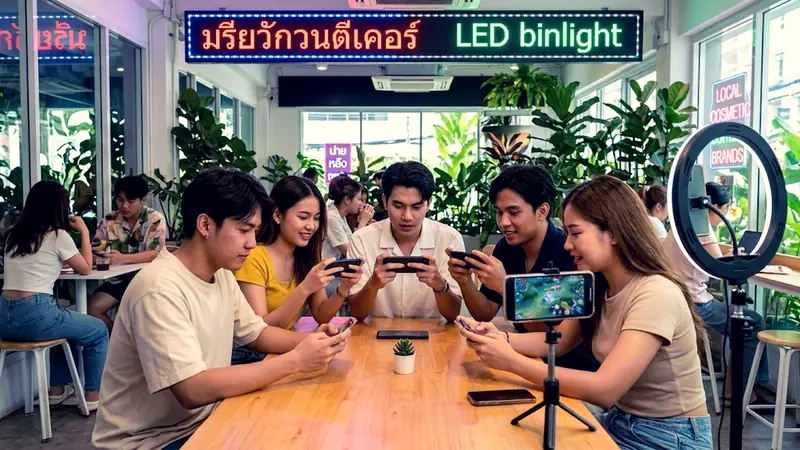
Indonesia, the Philippines, Thailand, Vietnam. One of the densest and most dynamic youth populations on the planet, entirely mobile-first, building a cultural identity increasingly detached from imported models. The South Korean myth — which had dominated the regional imagination for a decade through K-Pop — is losing ground. In its place, T-Pop (Thai pop music) and P-Pop (Filipino pop music) are exploding, with groups like BINI and SB19 filling both digital and physical squares. In the Philippines, Budots parties — built around a frenetic, deliberately kitsch local music genre — are becoming viral trends. This isn't nostalgia. It's reclamation.
On the gaming front, the structural gap with the rest of the world is real. While competitive e-sports in Europe and the United States run on PCs and consoles, in Southeast Asia it happens almost exclusively on smartphones. Titles like Mobile Legends: Bang Bang, Free Fire, and PUBG Mobile are not simply games: they are social squares, gathering places, secular religions. Tournaments fill physical stadiums and pro players are idolized. At the same time, entertainment and shopping have merged into a single experience — Shoppertainment — with hours of live-streaming on TikTok Shop and Shopee replacing every other form of traditional advertising. To balance social and academic pressure, urban weekends are dominated by the ritual of Cafe-Hopping: moving from café to café in search of hyper-curated environments, aesthetically perfect drinks, and content worth posting. They call it Healing. It's a word that will keep coming up.
Japan: Idols, Avatars, and Heisei-Era Nostalgia
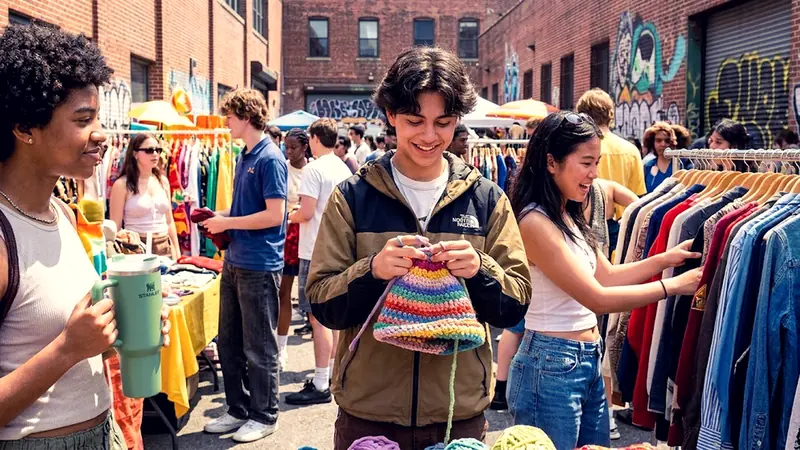
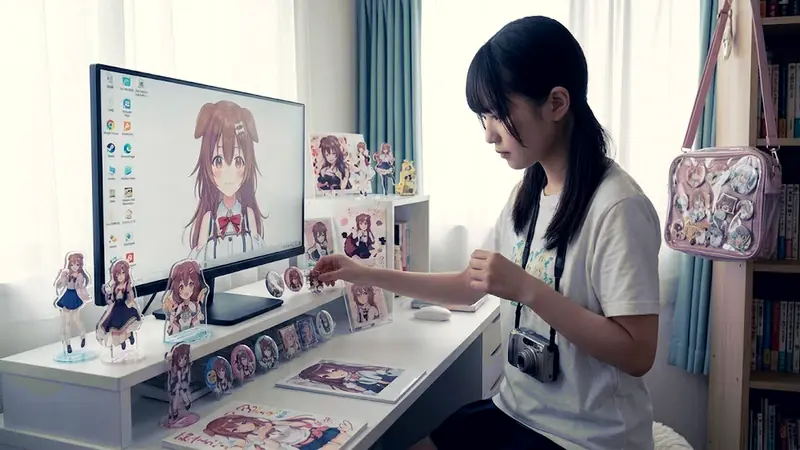
In Japan, the pressure of social conformism — seken (the weight of collective social judgment) — and a structurally stagnant economy spanning decades have produced a generation that seeks precise, almost surgical identity refuges. The dominant macro-trend has a specific name: Oshikatsu (推し活), literally "activities of supporting one's favorite." A market valued at over 3.5 trillion yen, approximately 20 billion euros. It means dedicating time, money, and emotional energy to an idol — a singer, an anime character, a stage actor — decorating transparent bags called Ita-bag (bags covered in dozens of character pins) with dozens of badges, building small shrines in bedrooms, traveling to events. This is not pathological obsession. According to those who practice it, it is a concrete antidote to loneliness.
The other side of the same coin is the rise of VTubers: virtual YouTubers who operate through anime-style avatars, managed by mega-agencies like Hololive. In a society where exposing oneself publicly on social media generates paralyzing judgment anxiety, these digital characters offer reassuring, parasocial (one-sided emotional connections with media figures) interactions — without the drama that comes with flesh-and-blood celebrities. Alongside this, nostalgia for the Heisei era — late 1990s, early 2000s — is mounting, perceived as more carefree and authentic. Old flip phones are worn around the neck as photographic accessories, vintage digital cameras are back, Purikura (Japanese photo-booth sticker machines) booths are packed, and loose socks (oversized socks that bunch down around the ankles) are back on the streets. It is Japan's answer to the global Y2K trend, with a cultural specificity that resists direct translation.

United States: Crochet, Micro-Aesthetics, and the Ethical Consumption Paradox
In the USA, youth culture is fragmented into algorithmic niches that shift monthly, driven by a system of Cores — visual micro-aesthetics that have replaced the old permanent subcultures. Punks, emos, and goths no longer exist as stable categories. Today, the shift runs from Cottagecore (romanticized rural life aesthetic) to Gorpcore (outdoor gear worn in urban settings), from the Clean Girl aesthetic to Mob Wife, often within the same month. Visual identity is fluid by definition. But beneath this fragmented surface, a powerful counter-movement is emerging: the return of so-called "Grandma Hobbies." Crochet, knitting — popular among young men too — ceramics, bread-baking, and reading (the BookTok phenomenon) are being deliberately chosen as tools to disconnect from screens and fight doomscrolling (the compulsive consumption of negative news online). Slow, tangible, analog activities.
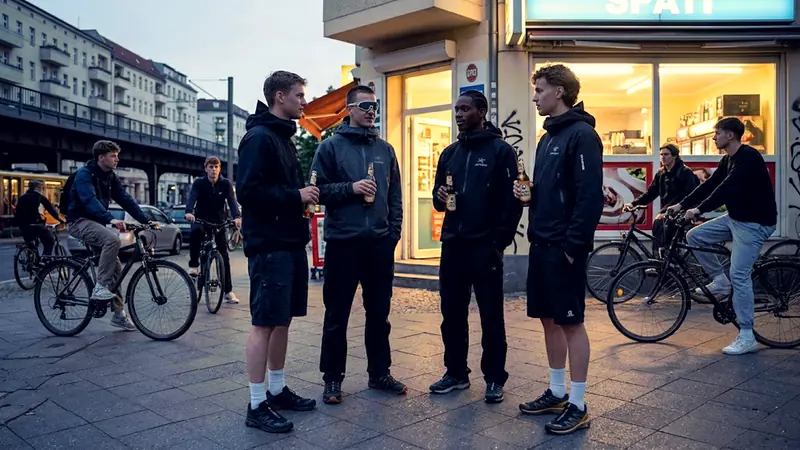
The most glaring American paradox involves consumption. On one side, an ethical passion for Thrifting — buying second-hand clothing on platforms like Depop or at flea markets — as an act of distinction and environmental responsibility. On the other, those same young Americans are the world's largest consumers of ultra-fast fashion, with Shein and Temu processing daily orders at scale. At the same time, everyday objects are fetishized and transformed into collectible status symbols — like the Stanley Cup thermal water bottle, which went viral. Gyms, meanwhile, have become the new social hubs thanks to GymTok, while the vocabulary of mental health — boundaries, gaslighting, trigger — has entered the everyday language of interpersonal relationships with zero taboo attached.
France and Germany: Manga, Street Rap, and Functionality as Aesthetic
In France, youth blends local cultural pride with a visceral passion for Asian nerd entertainment and an ecological pragmatism that has stopped being ideological and become behavioral. France is the world's second-largest manga market, right after Japan. Otaku culture (obsessive fandom around Japanese anime and manga) is not a niche: it is absolute mainstream. Releases of One Piece volumes are national events. French rappers cite anime in their lyrics. The Pass Culture — the state-issued 300-euro voucher for 18-year-olds — is spent predominantly on comics. On the music front, Rap Français and drill, with artists like Jul, Gazo, Tiakola, and PLK, dominate the charts unchallenged and dictate the aesthetic of an entire generation: the banlieue look — acetate tracksuits by Lacoste and Nike TN sneakers nicknamed "Les Requins" (The Sharks) — has become the standard even for young Parisians from bourgeois backgrounds. For shopping, the app Vinted (second-hand clothing marketplace) is not a trend: it is the normative standard. Buying new fast fashion is considered both anti-aesthetic and morally questionable.
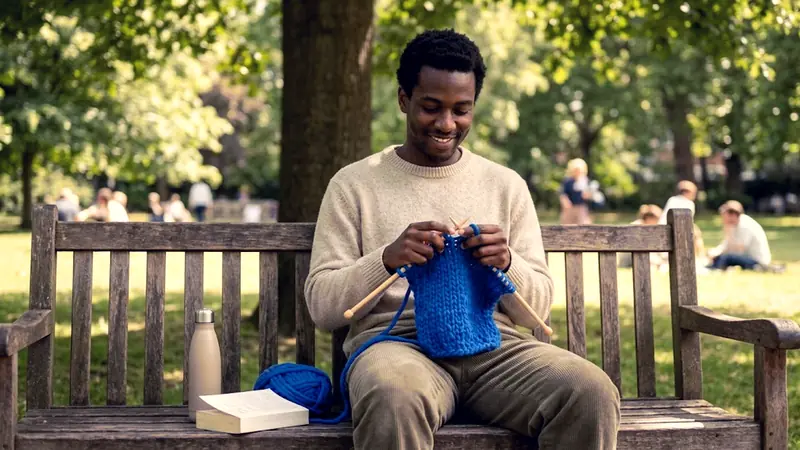
In Germany, Gen Z lives a dichotomy between acute ecological awareness and a hard-edged work pragmatism, sharpened by inflation and political uncertainty. Clothing must be functional above all else: brands like The North Face, Salomon, Jack Wolfskin, and Arc'teryx are worn with Gore-Tex jackets and hiking boots to university or to the club. In Berlin and other major cities, club culture and Techno music are a social rite of passage, not mere entertainment. The club aesthetic — total black, leather, cyclist-style sunglasses — is worn during the day too. Evenings are spent outside Späti (late-night corner shops, open until the early hours), with a beer or the iconic Club Mate (a yerba mate-based energy drink that became a symbol of German hacker and youth culture). On work, the "Youth in Germany 2024" study dismantled the myth of the idealistic young person: German youth demand high salaries, reject overtime culture, and treat Work-Life Balance as a non-negotiable right.
Three Red Threads: What No Border Can Divide
Despite geographic and cultural distances, three structural tendencies cut across every latitude. First: second-hand fashion as status symbol. Whether it's called Thrifting, Vinted, or simply chiner (French slang for hunting vintage finds), second-hand is no longer a stigma. It is the primary way to find unique pieces, express individuality, and signal environmental responsibility. Second: the collapse of physical third spaces (public places outside home and work where people gather) in favor of virtual ones and micro-niches. The new gathering places are on Discord, inside multiplayer games, within Oshikatsu fandoms, or in BookTok threads. Generalist culture — appealing to everyone, speaking to everyone — is clinically dead. Third, and perhaps the most revealing: leisure time as therapy. Whether it's knitting in Brooklyn, café-hopping in Manila, or bouldering in Munich, the hobbies of 2026 are not pastimes. They are deliberately chosen tools for shielding against hyper-connectivity, tending to mental health, and holding back an anxiety about the future that — from Tokyo to Los Angeles — wears exactly the same face.