
Key Takeaways
- Endurance record: German engineer Rudiger Koch spent 120 days at a depth of 11 meters off the coast of Panama, setting a new world record.
- Scientific habitat: the Vanguard module, developed by British company DEEP, is the first habitable underwater laboratory built in 40 years, positioned at 17 meters within the Florida Keys National Marine Sanctuary.
- Project expansion: DEEP aims for a permanent human presence underwater by 2030 with the Sentinel module, designed to accommodate six people for 28 days at a depth of 200 meters.
Luxury Underwater Residences: Muraka and Floating Seahorse
In the Maldives operates The Muraka, the world's first underwater hotel residence, spanning two levels supported by 10 concrete pillars. The upper level houses a living room, master bedroom, and gym; the lower level descends more than 5 meters below the surface, with glass walls offering a 180-degree view of the surrounding marine life.
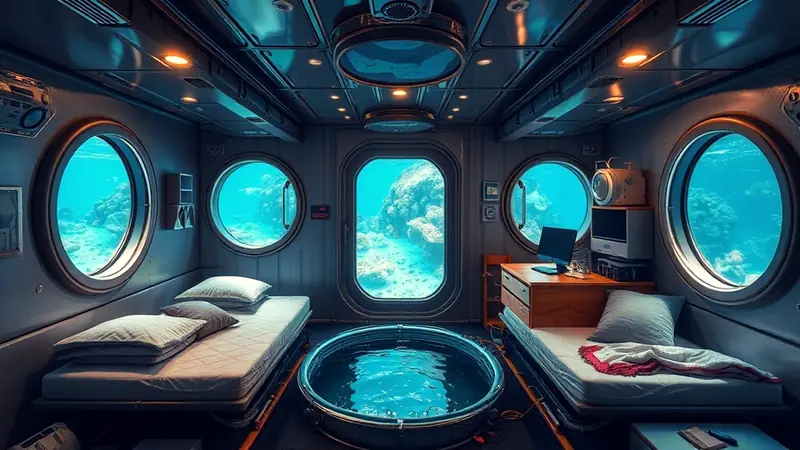
In Dubai, the Floating Seahorse villas, designed by Italian architect Gianfranco Rasile, follow a private residential concept. Each unit spans three levels, one of which is fully submerged, featuring two 25-square-meter windows anchored at a depth of a meter and a half to compensate for tidal variations.
Vanguard: From Tourism to Scientific Research
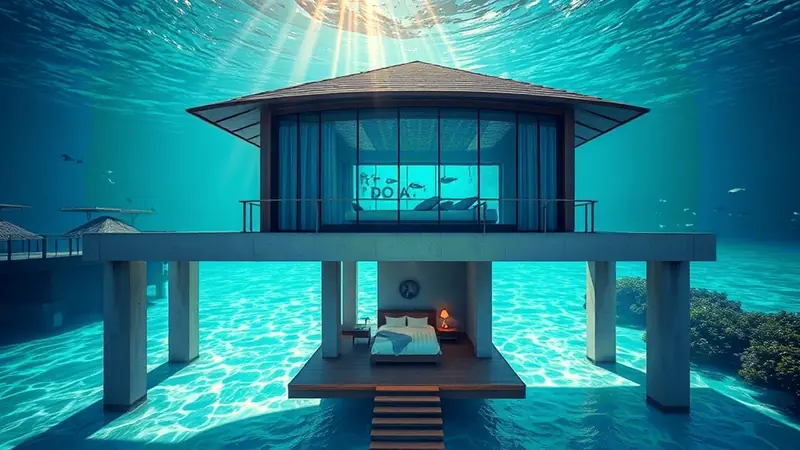
The Vanguard module, roughly the size of a steel shipping container, houses up to four aquanauts for a week or more, featuring a 44-square-meter living space equipped with fold-away bunks and workstations. The structure is designed to operate at depths of up to 50 meters.
Its operation relies on saturation diving: occupants live in a hyperbaric chamber, with their tissues saturated with nitrogen, and can exit through a moon pool without undergoing decompression on every dive. This allows researchers to observe marine organisms in their natural environment for extended periods.
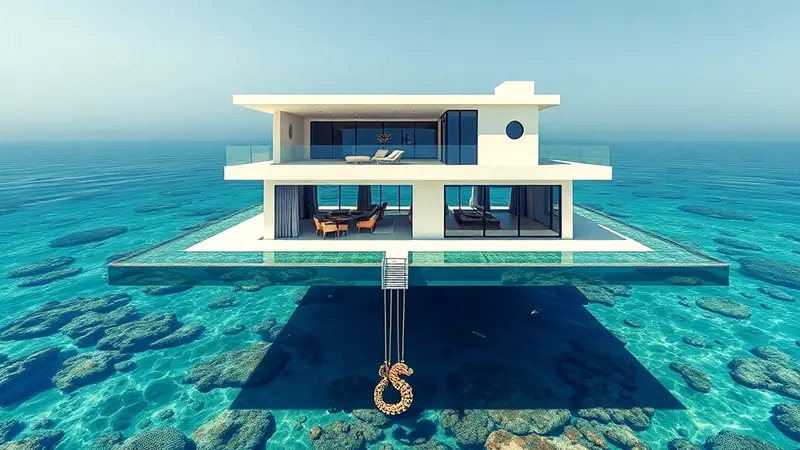
Dawn Kernagis, DEEP's Director of Science, outlined the project's goal: expanding underwater living to a wider range of people. The company is already developing Sentinel, a larger habitat intended for six occupants over 28 consecutive days at a depth of 200 meters.
The Koch Case: Daily Life on the Seabed
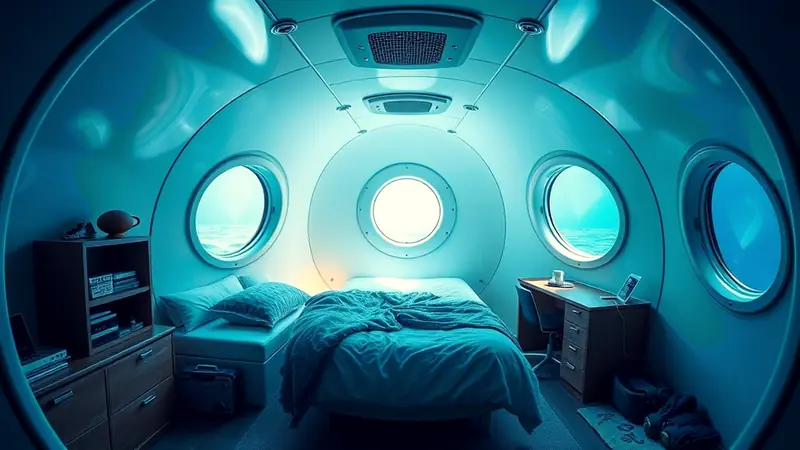
Rudiger Koch, 59, spent 120 days inside a 30-square-meter capsule as part of Ocean Builders' Seapod Alpha Deep project, at a depth of 11 meters off the coast of Panama. The living quarters included a bed, a toilet without a shower, fans, a television, a computer, and an exercise bike, powered by solar panels and connected via satellite to the surface.
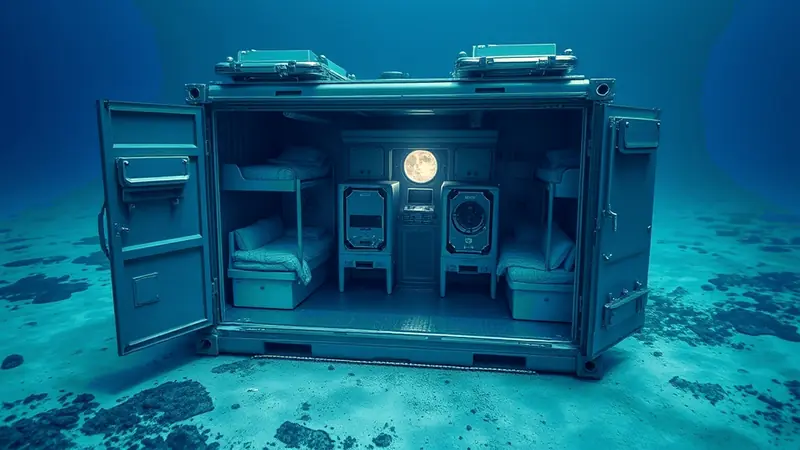
A typical day began at six in the morning with the news, followed by work and household chores. Koch described underwater life as quieter than the pace of city living, marked instead by the sound of waves and the noises of marine wildlife. The capsule was not designed for tourists or families, but served as proof of technical feasibility for extended stays on the seabed.
Looking Ahead
Across luxury structures, research laboratories, and individual experiments, underwater living technologies are converging toward a single goal declared by DEEP: a stable human presence in the oceans by 2030.