Key Takeaways
- Linguistic identity on the rise: A cultural revival of mother tongues like Taiwanese Hokkien and Hakka now anchors the indie music scene and podcast production.
- A distinctive digital ecosystem: Local platforms PTT (a long-running bulletin board forum) and Dcard, alongside Instagram and Threads, serve as public forums for shaping opinion and organizing civic action.
- The "small but beautiful" business model: Independent micro-businesses are thriving across Taipei, clustered in districts like Zhongshan and Gongguan, powered by crowdfunding and online retail tools.
An Identity Laboratory at the Heart of Taipei
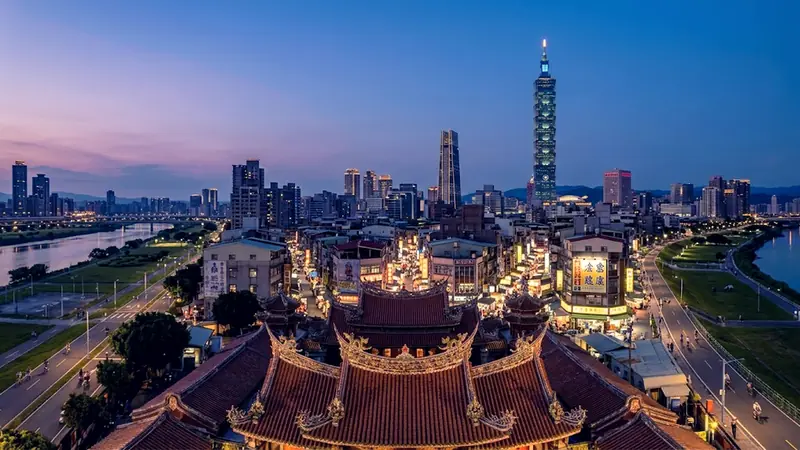
Taipei offers a privileged vantage point for understanding the dynamics of a generation that has built its own identity along an original path, one shaped from within rather than imposed from outside. Over recent decades, the city — and Taiwan more broadly — has cultivated a youth culture rooted in a singular historical and political condition: that of a consolidated democracy perpetually defined in dialogue with mainland China. This condition does not simply produce an oppositional stance; rather, it fuels an active, ongoing process of constructing a recognizable "Taiwanese-ness," visible in everyday choices, cultural consumption, and the aesthetic forms embraced by young citizens.
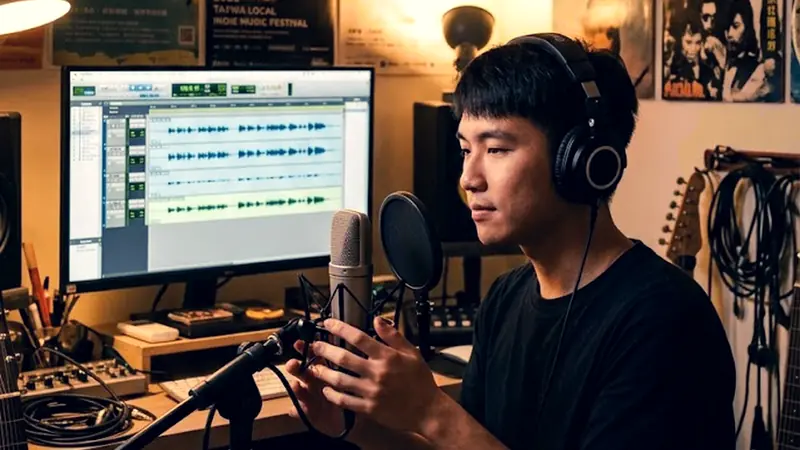
The clearest expression of this identity-building lies in language. Taiwanese Hokkien and Hakka, once confined to domestic use or dismissed as secondary dialects, are now reclaimed as emotional vessels of a full-scale cultural renaissance. This linguistic shift takes concrete form in a thriving independent music scene that uses these languages as its primary mode of expression, as well as in a wave of podcasts and contemporary literary work that treats them as a defining feature rather than a limitation.
Rootedness in the Land and a New Entrepreneurship
Alongside this linguistic reclamation runs a strong attachment to Taiwan's landscape, from its inland mountain ranges to its coastal areas. This bond translates into tangible practices: growing domestic tourism geared toward sustainability, and a rediscovery of local craft and culinary traditions, now reinterpreted with contemporary sophistication by a new generation of entrepreneurs. This is not a nostalgic exercise but a cultural operation that reads local heritage through today's aesthetic codes.
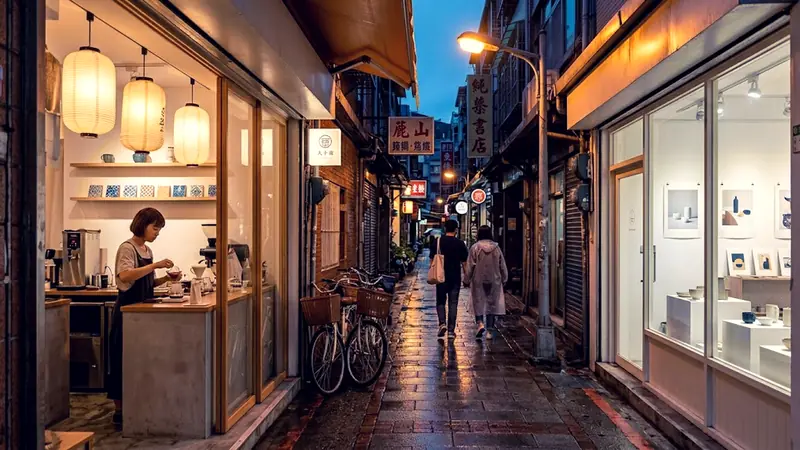
This dynamism finds its physical epicenter in neighborhoods like Zhongshan and Gongguan, home to a dense network of independent micro-businesses: small shops, specialty coffee bars, design studios, and pop-up art galleries. The guiding model here isn't large-scale, scalable growth, but the sustainability of small ventures capable of expressing a personal, authorial vision. This commercial fabric is bolstered by widespread access to digital tools, allowing anyone to launch a brand, open an online store, or start a crowdfunding campaign, bypassing traditionally more structured production channels.

Digital Connectivity as Public Space
The digital dimension of Taiwanese youth culture extends well beyond commerce, taking on a social and political function of primary importance. Platforms like PTT (a bulletin-board forum still fiercely active), alongside Dcard (a popular local social network), Instagram, and Threads, aren't used merely for everyday socializing — they function as genuine public forums where shared opinions form and collective mobilizations take shape.
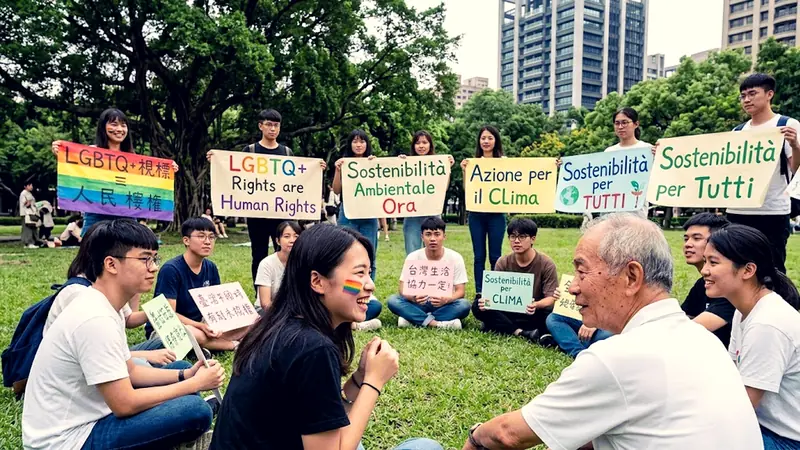
This fusion of digital and civic space has a clear historical precedent in the 2014 Sunflower Movement (a student-led protest occupying parliament), an event that left an indelible mark on an entire generation of young Taiwanese. That episode demonstrated concretely how the virtual square and the physical one can merge, generating political force capable of shaping institutional decisions. For young people raised in this context, democracy is not a settled inheritance but a condition demanding active participation and constant vigilance.
Civic Engagement and New Social Models
Taiwanese youth activism doesn't stop at geopolitics — it runs through multiple facets of daily life. On civil rights, Taiwan stands out regionally for its attention to LGBTQ+ rights, with legislation and social sensibility placing the island at the forefront compared to other contexts in the region. In parallel, environmental awareness is growing, with concrete initiatives aimed at reducing single-use plastics and promoting low-impact mobility.
A further area of experimentation concerns models of cohabitation and forms of intimacy, with younger generations working to build alternatives to traditional Confucian-rooted family structures. This openness doesn't stem from a sudden ideological rupture, but from a gradual process of negotiation between cultural heritage and new social needs — a balance young Taiwanese are building day by day.
Taken as a whole, Taipei's youth culture represents a phenomenon of social innovation rather than a mere aesthetic trend or a replica of pre-existing global models. It is the layered response of a generation that, despite living under a condition of existential uncertainty tied to its geopolitical context, has chosen to define its identity through freedom of expression, the building of inclusive communities, and a radical embrace of its own cultural specificity. Taipei thus confirms itself as a setting where forms of modernity deeply rooted in local territory are being tested, with strong emphasis on democratic participation and the human dimension of social relationships.