Key Takeaways
- Total virality: 84% of songs that entered the Billboard Global 200 in 2024 gained their initial traction on TikTok, according to the 2025 report from TikTok and Luminate.
- Sleazepop and Post-Genre: Gen Z is ditching rigid labels in favor of fusions like sleazepop, a blend of hyperpop, indie sleaze, and club electronic.
- Local Boom: in Indonesia, the share of local artists in Spotify's top 10 jumped from 39% to 97% between 2021 and 2026.
The ordered chaos of pop in 2026
Pop in 2026 no longer moves in a single direction. It has an algorithm calling the shots and an audience that, despite the algorithm, keeps searching for something real. On one side sits the machine of instant virality; on the other, a quiet resistance from listeners who still want to feel something. The numbers are brutal: 84% of tracks that landed on the Billboard Global 200 in 2024 started on TikTok. That's not a footnote, it's the new law of physics governing the industry. Songs are getting shorter, choruses are moving up front, hooks are becoming obsessive. Artistic depth, when it exists, has to fight its way through a mechanism built to last fifteen seconds.
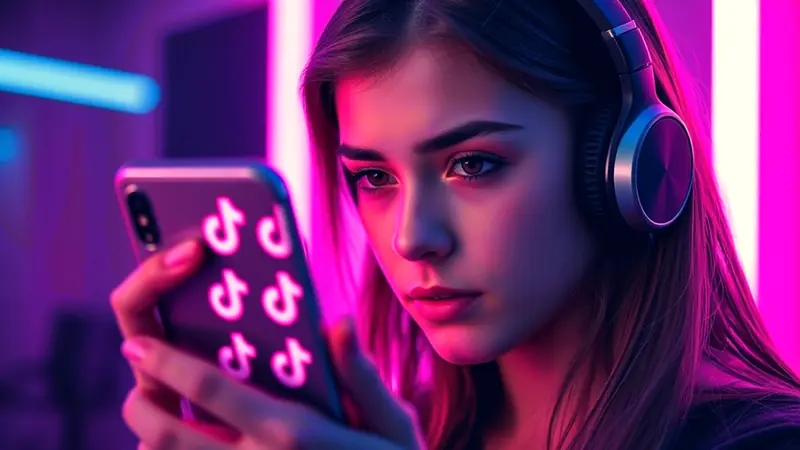
Meanwhile, genres have dissolved into each other. There are no more sealed compartments: afrobeats, Latin, hip-hop, and electronic music blend into the same track without asking permission. Sleazepop, the sound of choice for Gen Z, captures this shift perfectly, fusing hyperpop, indie sleaze, and club electronic into one sonic identity that refuses to be labeled. Then there's language, or rather the end of its monopoly: 48% of the most-streamed tracks in 2026, per the Billboard Global 200, feature lyrics not in English. Recommendation algorithms, combined with international collaborations, have taken apart the idea that pop needs to speak one language to work.
Korea, Japan, and Southeast Asia: multiple speeds
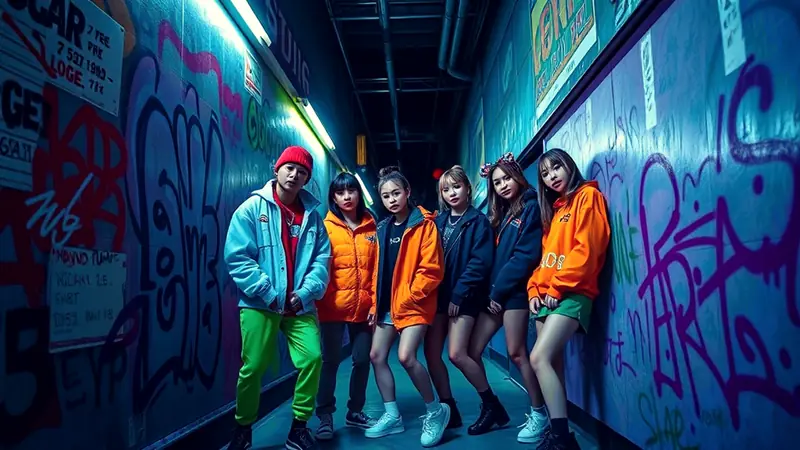
K-pop has split into two parallel lanes. On one side, the fast lane built for challenges and instant consumption: groups like ILLIT and CORTIS work with short tracks and social-ready choreography, with the latter moving 2.3 million copies of its mini-album in a single week. On the other side, a slower, more poetic current led by Hanroro and the duo AKMU, built on introspective songwriting and live emotional connection. The aesthetic is shifting too: boy groups like NCT Wish are trading dark concepts for brighter, more youthful imagery, while girl groups like Young Posse and Badvillain are claiming a street style traditionally coded as male.

In Japan, J-pop is riding the wave of "Latin J-POP," reinterpreting reggaeton, salsa, flamenco, and bossa nova through groups like Juice=Juice and M!LK. The trend travels well beyond Japan's borders, with localization strategies pushing J-pop into South Korea. Southeast Asia is undergoing a deeper, more structural revolution: between 2021 and 2026, the share of local artists in Indonesia's Spotify top 10 leapt from 39% to 97%, and in the Philippines from 31% to 81%. Thai T-pop is growing right alongside it, with MILLI, Jeff Satur, and 4Eve carrying the genre all the way to the Coachella stage.
The Americas: experimentation and Gen Z power
In Latin America, pop is experimenting without limits. Rusowsky and Ralphie Choo are reshaping Spanish-language sound, while Latin afrobeats keeps gaining ground. Reparto, the Cuban urban genre fusing reggaetón, hip-hop, and island folk, is finding an international audience thanks to a newly politicized generation shaped by transfeminist voices and hyperpop leanings.
In the United States, Gen Z firmly holds the controls, accounting for 48% of music streaming revenue and effectively setting the rules of the game: music built for immediate impact. Alongside this sits a strong vinyl revival and a growing split between West Coast pop and Southern country/roots music. At the top of the charts, Taylor Swift, Sabrina Carpenter, and Ariana Grande remain firmly in place.
Europe: female voices and identity fusion
In the UK, women are running the show: Olivia Dean, Lola Young, and Sienna Spiro are redefining stardom with warm voices and sharp identities, while Olivia Rodrigo remains the undisputed queen of unfiltered authenticity. The fusion of British pop and afrobeats is the soundtrack of summer 2026.
In France, chanson is being reborn through female artists like Miki, Camille Yembe, and Adèle Castillon, celebrated at the 2026 Victoires de la Musique as symbols of a younger, more hybrid nation. In Germany, Deutschrap dominates, built largely by children of Turkish, Arab, and Balkan immigrant communities, while indie pop goes multicultural with the trio ENGIN and with Kauta, who sings in German, French, and Arabic.
Africa: afrobeats digs inward
Nigeria's Gen Z is dismantling afrobeats' dancefloor formula, pushing it toward more intimate territory. Qing Madi, Rema, and Ayra Starr blend R&B, amapiano, trap, and indie, leaning on digital ecosystems to build total creative independence. The continent is bubbling with other emerging movements: South Africa's lekompo, electronic and socially engaged; Sierra Leone's krio fusion; and Algeria's way-way, a raï subgenre spread through YouTube that has already taken over local youth culture.
A mosaic with no center
Pop in 2026 has no capital. It has nodes, not hierarchies: technology pushes toward standardization, while the search for identity pushes back in the opposite direction. The result is an ecosystem where a track can explode in fifteen seconds on a vertical screen, or build its success one listen at a time, on a stage, in a language the algorithm never saw coming.