
Key Takeaways
- Speed tested: Mach 5 flight simulation, equivalent to roughly 5,400 km/h, conducted in a wind tunnel.
- Key technology: Hydrogen-fueled ramjet engine and an integrated airframe-propulsion control system.
- Consortium and next step: Test led by JAXA, Waseda, Tokyo and Keio universities; the next phase involves launching the demonstrator on a sounding rocket for an actual atmospheric flight.
The test rewriting the rules of the sky
April 16, 2026 will remain a date worth marking for anyone following advanced aviation. Not a flight, not a spectacular takeoff in front of cameras, but something far more concrete and far less photogenic: a combustion experiment conducted on the ground, inside a hypersonic wind tunnel at JAXA's Kakuda Space Center in Miyagi Prefecture. A joint team from JAXA, Waseda University, the University of Tokyo, and Keio University simulated Mach 5 flight conditions, roughly 5,400 km/h, on an experimental model just two meters long. No open sky, then, but a controlled environment capable of faithfully reproducing the thermal and aerodynamic stress a real aircraft would encounter at that speed.
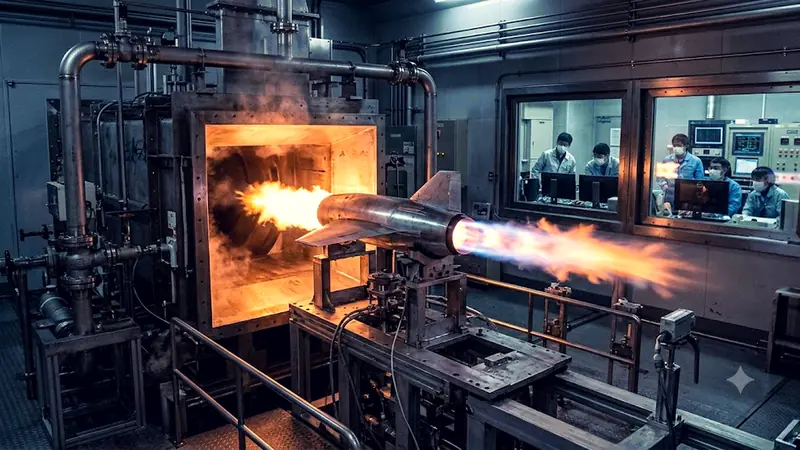
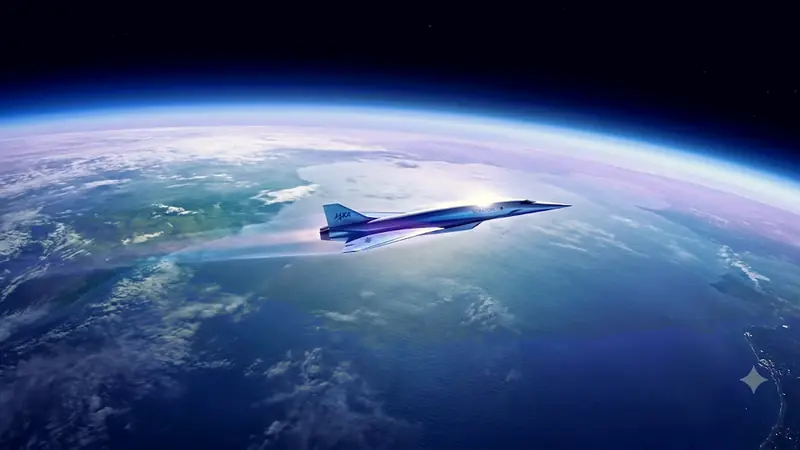
The project's stated goal is as simple to state as it is complex to achieve: a hypersonic passenger aircraft capable of crossing the Pacific Ocean in two hours. Tabletop science fiction? Not anymore, at least not entirely. The test involved igniting a hydrogen-fueled ramjet engine, with simultaneous verification of the structure's thermal resistance, the behavior of control surfaces, and the integration between engine and airframe. Three variables that, at those speeds, cannot be treated separately.
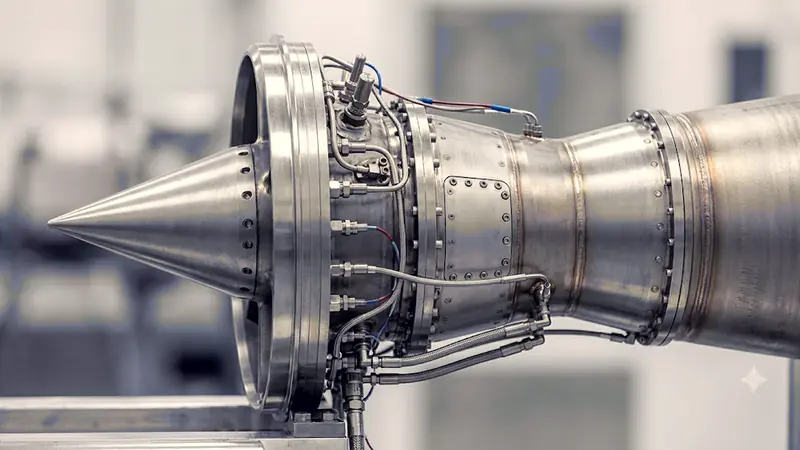
The enemy is called heat
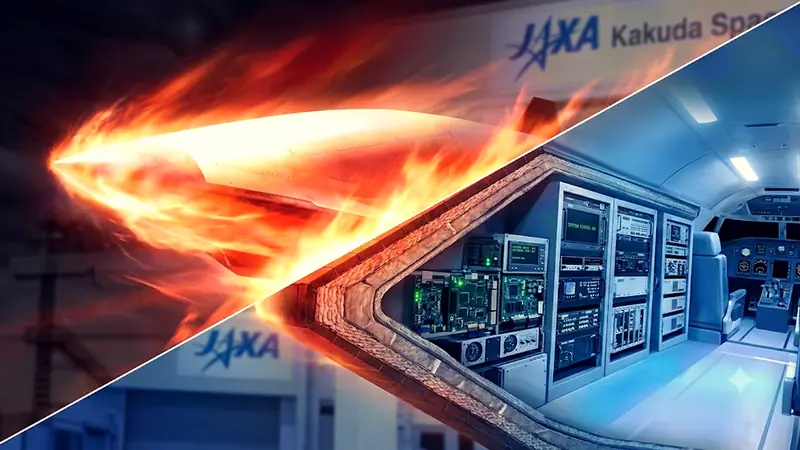
At Mach 5, the problem isn't staying airborne, it's not melting. The violent compression of air against the aircraft's surface generates temperatures approaching 1,000 degrees Celsius, hot enough to liquefy the metals used in conventional aviation. The real achievement of this test, beyond simply igniting the engine, was demonstrating that the prototype's thermal shield can keep the aircraft's interior at room temperature, isolating avionics and onboard systems from an external environment that is literally red-hot. Without this barrier, any talk of commercial hypersonic flight would remain pure theory.
One single organism, not two separate components
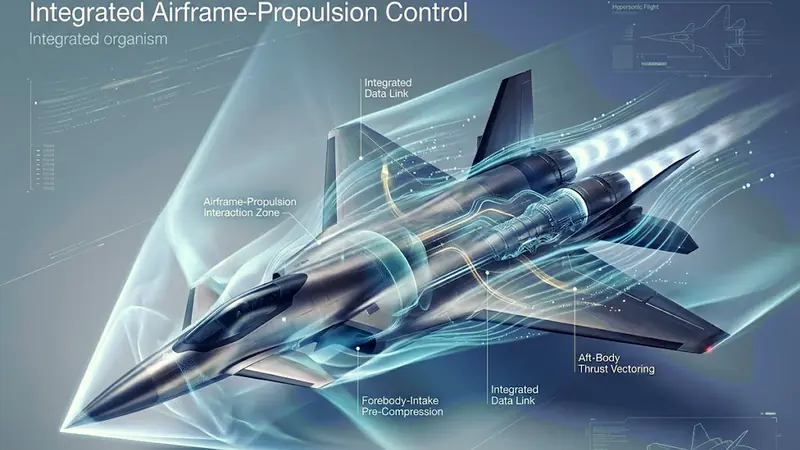
In traditional aircraft, the engine and fuselage can be designed with a degree of mutual independence. At Mach 5, this luxury disappears. Shock waves generated by the fuselage alter the airflow feeding the engine, while propulsive thrust in turn alters the aerodynamic behavior of the entire aircraft. This is the principle behind the design philosophy dubbed "Integrated Airframe-Propulsion Control," which was precisely the central focus of the experimental verification conducted at Kakuda. Not a minor technical detail, but the conceptual heart of the entire program: if this approach doesn't work, nothing does.
What happens now
The transition from wind tunnel to actual sky isn't immediate. Researchers have already outlined the next step: mounting the technology demonstrator on a sounding rocket to conduct a real test flight in the atmosphere, finally moving out of the laboratory to face conditions that are no longer simulated but actual. Only then will it be possible to verify whether the data collected on the ground holds up against the reality of atmospheric flight.
The potential applications of this technology extend beyond intercontinental passenger transport. The same engineering foundation, ramjet engine and integrated airframe-propulsion control, could serve as the basis for developing "SpacePlanes," aircraft capable of reaching an altitude of 100 kilometers, at the edge of space. A leap that would transform the project from a simple aeronautical alternative into a dual-use platform for suborbital access.
The international context
The Japanese program isn't emerging in a competitive vacuum. Several countries are working on parallel hypersonic technologies: China has publicized the development of aircraft such as the project named "White Swan," while the United States maintains substantial investments in similar platforms. Within this global research landscape, the result achieved at Kakuda places Japan among the active players in the race toward civilian and dual-use hypersonic technology, with a verifiable and documented scientific contribution, not just announcements.
How much time separates this prototype from an actual operational passenger aircraft remains to be seen. Numerous variables still need to be resolved: from safety certification to scaling up production of the thermal shielding system, to designing a cabin able to withstand repeated cycles of extreme thermal stress. But April 16, 2026 nonetheless marked a solid milestone: hypersonic combustion made in Japan is no longer just a computer-simulated hypothesis, it's an experimental data point recorded in a wind tunnel, ready for the next, real, leap into the sky.