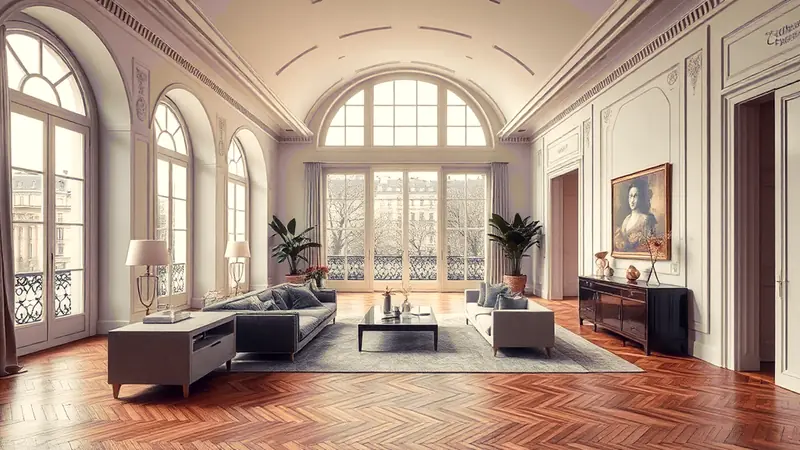
Key Takeaways
- The global phenomenon: Scandinavian aesthetics — white walls, pale wood, raw linen — have become the dominant visual language of hotels, cafés, and short-term rentals across the planet.
- The historical roots: The movement was born in the postwar era through figures like Arne Jacobsen, Alvar Aalto, and Hans Wegner, with the Wishbone Chair standing as its absolute icon.
- The commercial mistake: Global replication copies only the aesthetic surface, betraying founding concepts like hygge, lagom, and sisu, which are behavior, not decoration.
The format that took over the world, without anyone noticing
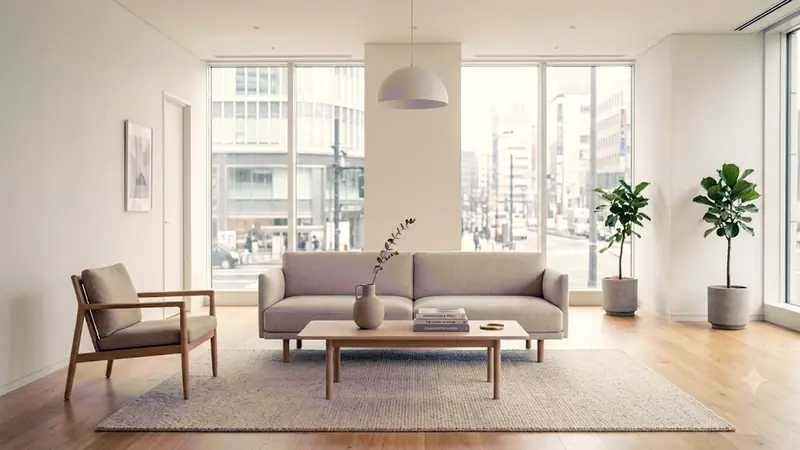
Walk into any hotel lobby, anywhere. White walls, bare to the point of obsession. An oatmeal-colored sofa that looks like it came out of a catalogue you've already seen a thousand times. A wooden side table with exactly three objects, arranged with the surgical precision of someone who knows clutter is a mortal sin. Above it, a pendant lamp that claims to be minimalist but is really just anonymous. This is Scandinavian design — or rather, what's left of it after being run through the meat grinder of short-term rentals and social media platforms. Scandinavia Standard put it with surgical precision: these trends spread "like software updates — they arrive quietly, propagate fast, and end up becoming invisible through repetition." No style has been plundered, photocopied, and misread quite like this one.
The origins of an aesthetic born from necessity, not marketing
Before it was a hashtag, Scandinavian design was an answer to a concrete problem. In the postwar era, Europe desperately needed functional objects — replicable at scale, cheap to produce — that still didn't feel purely utilitarian. Danish, Swedish, Norwegian, and Finnish designers worked under the pressure of endless winters, small living spaces, and a cultural obsession with social equality. Out of that pressure came objects that worked, and that, on top of it, were beautiful. Not status symbols. Tools.
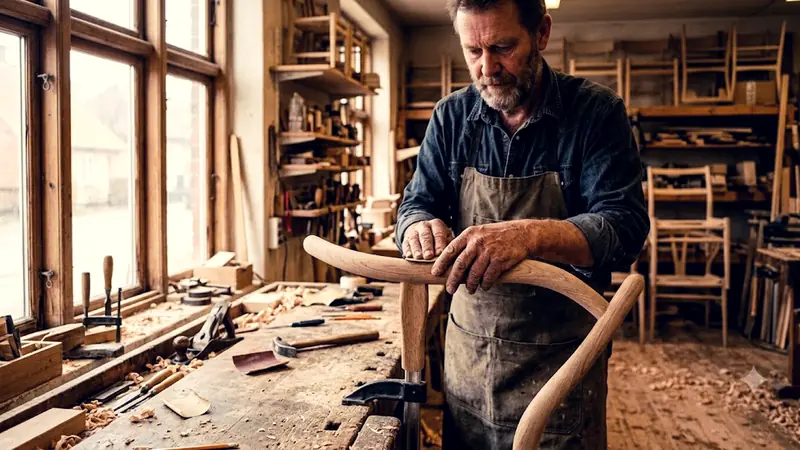
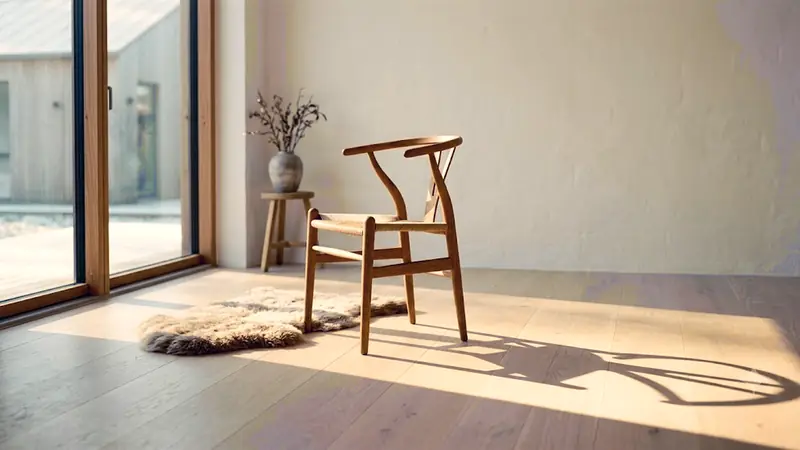
The chairs of Arne Jacobsen, the furniture of Alvar Aalto, the Wishbone Chair by Hans Wegner: none of these pieces were minimalist for fashion's sake. They were stripped of the superfluous because the superfluous was, quite simply, the problem to solve. Clean lines weren't a stylistic quirk, they were honest. Materials were natural because they aged well and stayed in constant dialogue with the outdoors — that Nordic nature Scandinavians respect precisely because it's hostile, not in spite of it. As Artwood Academy points out, every element exists to make the most of scarce natural light and to create livable shelters through endless winters. Nothing is there by accident.
The detail the copycats can't photograph
Here lies the biggest, most widespread misunderstanding on a global scale. Pinterest and Instagram have only captured the surface: the palette, the silhouette, the empty space between objects. What photographs fail to convey is the underlying philosophy — and that's exactly the part everyone consistently forgets, from amateur interior designers to rental hosts to hotel chains.
The crucial element is intention. The Scandinavian concept isn't about having few things, full stop. It's about having few things you truly love, not few things that simply look sparse. There's a vast distance between an empty room and a room that contains only what matters. The first is barren. The second is a conscious, deliberate, almost philosophical choice.
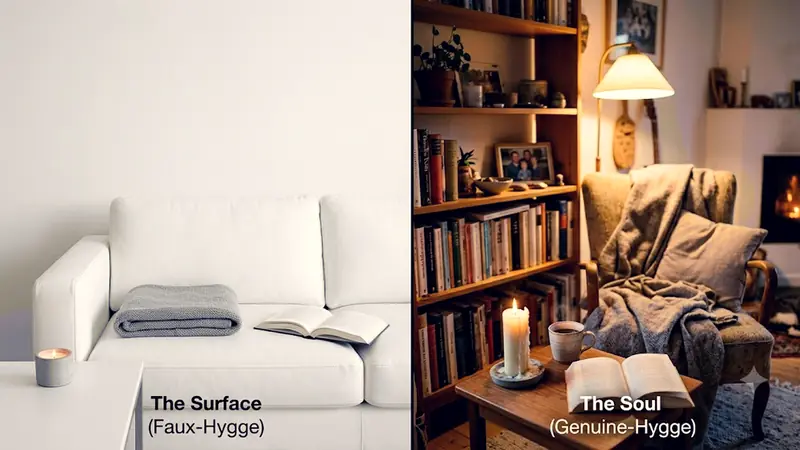
In Denmark there's hygge, that untranslatable quality of warmth and belonging that design is meant to serve, not replace. In Sweden there's lagom, the principle of just the right amount, neither excess nor deprivation. In Finland — right at the coordinates of Helsinki, 60.1699 north, 24.9384 east, the beating heart of this culture — sisu survives, a quiet resilience that doesn't need to be explained to exist. These aren't aesthetic trends meant for mass replication. They're deeply rooted behaviors that generate, as a natural consequence, a certain kind of object and space. Design comes after. Not before.
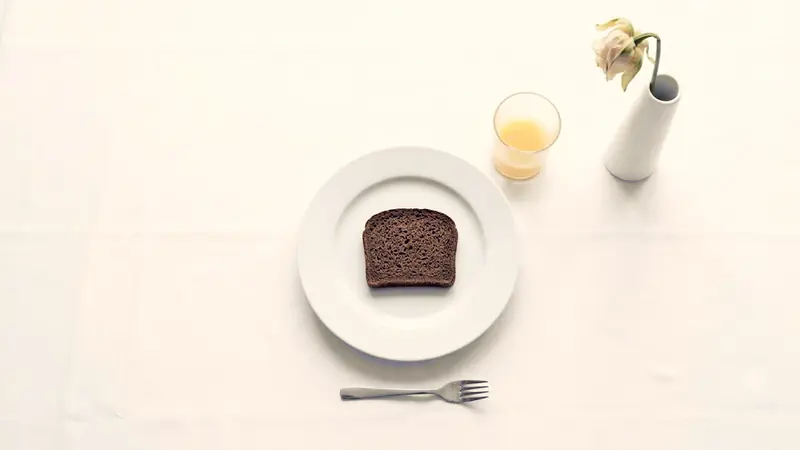
When you copy the form and lose everything else
The structural problem with global replicas is that they stop rigidly at form. The Irish Independent puts it bluntly: "Scandi is the most overused and misapplied term in the world of interiors." Tidy rooms, light walls, blonde wood furniture get automatically labeled Scandinavian even when they have no real connection to that tradition. The result, the article warns, is that you lose exactly what made that design interesting in the first place.
Scandinavian style is minimalist, but it isn't cold — the confusion with other minimalisms is constant, but the soul behind it is radically different. It isn't just white, it isn't sterile. It's a style that doesn't impose, it welcomes. It doesn't show off, it accompanies. Surface-level copies produce spaces that photograph perfectly well but remain empty shells, lacking warmth, history, that sense of shelter that only comes from furnishing done with real intention. It's the clear difference between a set built for social media and a home that's actually lived in. Between a room that looks Scandinavian and one that truly is, in the deep spirit of things, long before it ever is in the aesthetics.