Key Takeaways
- Enterprise adoption: 40% of business applications now integrate specialized AI agents, up from less than 5% in 2024, with a 327% surge in multi-agent workflows during the second half of 2025.
- New models: OpenAI rolls out GPT-5.6 with its Sol, Terra, and Luna variants; Meta launches Muse Image alongside a preview of Muse Video; Google unveils Gemini 3.5 Flash, Gemini Omni, and the Spark agent.
- EU regulation: Starting August 2, 2026, AI Act transparency obligations take effect, with penalties reaching up to €15 million or 7% of global revenue.
Artificial intelligence is shedding its role as a passive tool, evolving into an autonomous agent capable of planning and executing complex tasks without continuous oversight. Gartner calls this shift a "step function" beyond the previous generation of generative AI, marking a clear break in enterprise system architecture.

The Agentic AI Era
Analyst Erick Brethenoux describes agentic AI as the "ability to build independent software entities that will work on behalf of the user or on behalf of a machine." The numbers confirm just how fast this transition is moving: 40% of enterprise applications now embed specialized AI agents for specific tasks, an eightfold jump from the 5% recorded in 2024. Databricks reports a 327% increase in multi-agent workflow adoption during the second half of 2025.
Forrester frames multi-agent systems as the "operating system for agentic AI"—networks of specialized agents that plan, delegate, and execute across complex workflows. Gartner calls it the "internet of agents," an infrastructure where multiple systems distribute decision-making to solve problems spanning several layers.

Next-Generation Models
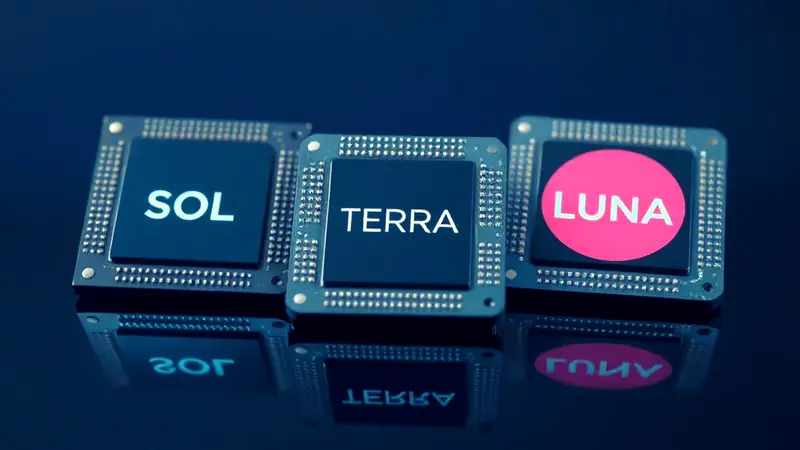
On July 9, 2026, OpenAI makes GPT-5.6 publicly available, following a limited rollout to select partners. The lineup includes three models: Sol, the flagship product; Terra, a mid-tier option for everyday use; and Luna, the fast-response variant. The release follows a review period by the Trump administration, which signed an executive order in June establishing a voluntary framework for reviewing frontier models.
Anthropic restores access to its Fable 5 and Mythos 5 models after concerns raised by the U.S. government over potential misuse in cyber and military contexts. Euronews notes that competition "is no longer just about model capabilities," but also about control over distribution and the use of training data. On July 7, 2026, Meta launches Muse Image along with a preview of Muse Video, the first multimedia models developed internally by Meta Superintelligence Labs.
AI Platforms and Infrastructure
The industry is shifting from standalone models to full platforms. Google transforms Vertex AI into the Gemini Enterprise Agent Platform, Microsoft focuses on Copilot and Azure AI Foundry, AWS bets on Bedrock AgentCore, and Anthropic builds out Claude with proprietary tooling. At Google I/O 2026, the company unveils Gemini 3.5 Flash, the multimodal Gemini Omni system, and the personal agent Spark. Monthly tokens processed across Google's surfaces jump from 9.7 trillion in May 2024 to over 3.2 quadrillion by May 2026.
Data sovereignty becomes a strategic priority. On July 7, 2026, Atos launches MogwAI, a sovereign generative and agentic AI platform covering the full value chain, featuring function-specific agents called "Gen-i" and flexible deployment options built around regulatory compliance.

Alibaba launches Qwen Cloud, an AI-native platform designed to simplify model access and deployment. DeepSeek releases version V4 on April 24, 2026. Tencent, ByteDance, Moonshot AI, MiniMax, and Zhipu AI build agents for local workflows, in a market that has seen over 200 large models released—averaging roughly one new model per day.
Regulation: The EU Sets the Rules
The EU AI Act enters its operational phase. Starting August 2, 2026, transparency obligations take effect for all AI systems placed on the European market. The deadline for implementing watermarking solutions on AI-generated or AI-manipulated content is extended to December 2, 2026. Penalties for violations can reach €15 million or 7% of global annual revenue. Guidelines for classifying high-risk AI systems have also been published.

Looking Ahead
The Thomson Reuters Institute report shows enterprise-level generative AI adoption nearly doubling, from 22% to 40%. The Futurum Group frames 2026 as less a year of universal scaling and more a fundamental struggle over reliability: the challenge is no longer proving that AI works, but making it governable and truly integrated into real operational processes. The era of autonomous agents has already reached its year zero.