
Key Takeaways
- An exploding market: The global AI in healthcare market is projected to reach nearly $188 billion by 2030, with a CAGR of 37% compared to the $11 billion recorded in 2021.
- Technologies at the forefront: From DeepMind's AlphaFold to Microsoft's Nuance DAX Copilot platform, through Aidoc and Zebra Medical Vision's imaging systems, artificial intelligence is already operational in real clinical settings.
- Systemic impact: HealthTech is redefining the global healthcare model: from a reactive system that treats disease to a proactive one that preserves health, with direct implications for pharmaceuticals, insurance, and care delivery models.
The Biggest Wave of the Decade Has a Name: HealthTech
This is not hyperbole. Nor is it the headline of a pitch deck for enthusiastic investors. It is an economic and systemic reading confirmed by data from global financial institutions and research centers: HealthTech is artificial intelligence's most complex and lucrative proving ground. The sector where technology stops optimizing business processes and intervenes directly on the most precious asset of all: human life and its longevity.

The numbers are stark in their clarity. According to a Statista report, the global market for AI applied to healthcare was valued at approximately $11 billion in 2021. Projections place it at nearly $188 billion by 2030, with a compound annual growth rate of 37%. Grand View Research simultaneously values the entire digital health sector — telemedicine, mobile health, healthcare IT — at $181 billion in 2023, with an overall potential measured in trillions when accounting for the indirect impact on pharmaceuticals and insurance models. This is not a speculative bubble. These figures capture a real and ongoing transition.
Six Pillars, One Direction
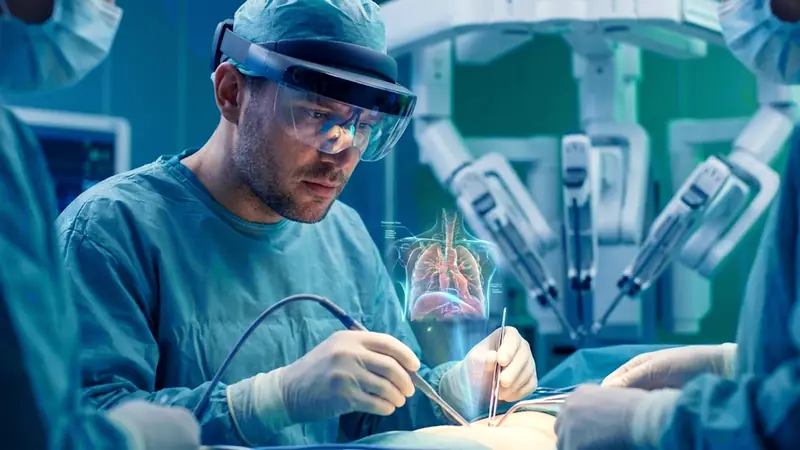
The revolution unfolds across six strategic axes, each at a different level of technological maturity but sharing a common trajectory: the integration of artificial intelligence at the core of clinical processes.
The first axis is surgical and rehabilitative robotics. Intuitive Surgical's Da Vinci system blazed the trail, but AI is now pushing the boundaries of automation toward intelligent intraoperative guidance: algorithms that analyze tissue in real time during a procedure, assisting the surgeon with a precision that surpasses the limits of human perception. On the rehabilitative front, companies such as ReWalk Robotics are developing exoskeletons capable of learning and adapting to each patient's specific movement patterns.
The second axis — and the most mature — is advanced imaging and diagnostics. Studies published in The Lancet Digital Health document how deep learning models trained on millions of mammographic images achieve diagnostic accuracy superior to that of human radiologists, simultaneously reducing both false positives and false negatives. Aidoc and Zebra Medical Vision are already integrated into hundreds of hospital facilities worldwide, operating as an infallible and tireless second set of eyes alongside the clinician.
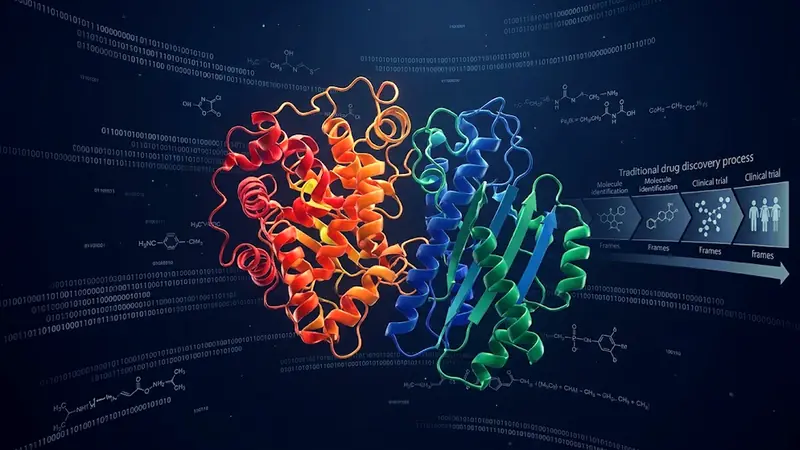
The third axis addresses drug discovery, traditionally one of medicine's slowest and most costly processes: over a decade of development and an average investment of $2.6 billion for each newly approved active compound. DeepMind's AlphaFold has solved a problem that remained open for fifty years, predicting the three-dimensional structure of proteins with previously unimaginable precision. Insilico Medicine identified a novel therapeutic target for idiopathic pulmonary fibrosis and reached phase one clinical trials in just eighteen months — a record that transforms AI from a theoretical tool into an operational protagonist of biomedical research.

The fourth axis is precision medicine and longevity. Moving beyond the standardized approach, AI systems cross-reference genomic and proteomic data, lifestyle information, and continuous streams from wearable devices to build individual health profiles. Human Longevity Inc., co-founded by Craig Venter, aims to build the largest genotype and phenotype database ever assembled, with the goal of predicting and preventing diseases before their clinical manifestation.
The fifth axis concerns the intelligent electronic health record. Historically perceived by healthcare professionals as a bureaucratic burden, the EHR is today being reimagined through generative AI. Systems such as Microsoft's Nuance DAX Copilot and solutions developed by Epic Systems listen to the conversation between physician and patient, extract clinically relevant information, and automatically compile documentation — returning precious time to the therapeutic relationship and countering professional burnout.
The sixth axis is predictive telemedicine. Beyond the video call, the continuous remote monitoring of chronic patients — diabetics, cardiac patients — through smart sensors connected to the cloud enables algorithms to detect critical deviations from vital parameters and generate hospital alerts before the patient experiences the first symptoms. Biofourmis is among the companies making this model an established clinical reality.
Rocks in the Wave
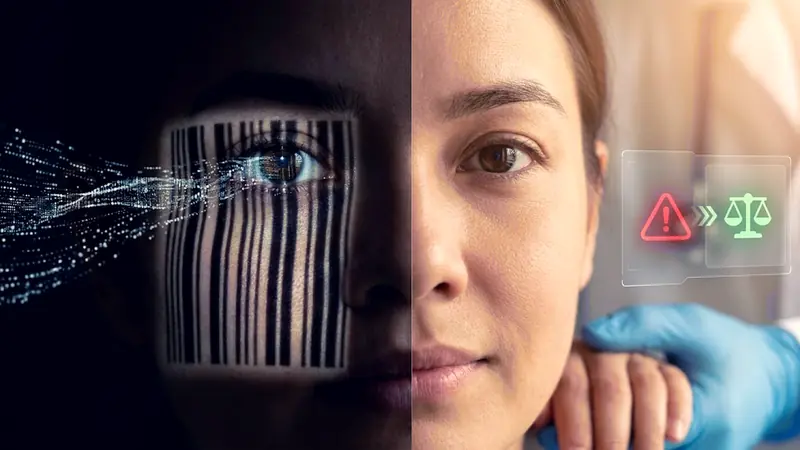
The trajectory is not without obstacles. The protection of health data, regulated by the GDPR in Europe and HIPAA in the United States, represents a structural challenge for any system operating on information this sensitive. The risk of algorithmic bias is at the center of debates within the WHO and leading regulatory agencies, including the FDA: models trained on non-representative datasets risk amplifying existing health inequalities, producing less accurate diagnoses for specific populations. The future emerging from this analysis is not one of AI replacing the physician, but of a hybrid ecosystem where artificial intelligence manages data complexity, leaving the clinician the time and space for empathy and final decision-making. The success of HealthTech will not be measured solely in billions of revenue, but in years of life gained.