Key Takeaways
- Law in effect: As of March 31, 2026, Denmark recognizes face, voice, and body as intellectual property through an amendment to the Copyright Act.
- Legal mechanism: Protection lasts for life plus 50 years after death, with extraterritorial application for content distributed from Danish servers.
- Open question: How the law interacts with the EU's GDPR and Digital Services Act remains unresolved, even as Copenhagen holds the rotating presidency of the European Council.
The Law and Its Scope
Denmark has amended its Copyright Act to introduce two new protections: a general protection that bans the public distribution of realistic digital replicas of a person's appearance, voice, and movements without consent, and a special protection reserved for performing artists, extended to cover their performances. The political agreement behind the text dates back to June 26, 2025, and passed with cross-party support in Parliament.

The protection covers anyone whose likeness is reproduced or distributed within Danish territory, regardless of nationality. A deepfake uploaded from a server located in Denmark falls under the law's scope even if the person depicted is not a Danish citizen.
Exceptions and Practical Boundaries
Satire, parody, caricature, and social commentary remain exempt from the ban. The distinguishing criterion set by lawmakers centers on labeling: if an artificially generated replica is clearly marked as such, the risk of it being mistaken for reality is considered limited. When content amounts to disinformation capable of harming others' rights or interests, however, the protection takes precedence over the exception.
Culture Minister Jakob Engel-Schmidt, who championed the proposal, stated that the law aims to affirm every person's right to their own body, voice, and features.

Tools for Citizens and Platforms
Anchoring the protection in copyright law allows Denmark to reuse an already-tested legal infrastructure: infringement standards, notice-and-takedown procedures, and penalties already applied elsewhere in European copyright law. A citizen can now request that content be removed, obtain compensation without having to prove reputational harm, and hold accountable any platform that fails to act.
This approach turns voice and image into potentially transferable, commercially exploitable rights, shifting the issue from the realm of privacy into that of property.
Reactions and Unresolved Questions
Within the European legal community, Denmark's approach has drawn both praise and skepticism. Some observers view the use of copyright law as a stronger enforcement tool than defamation or personality rights statutes, which have historically produced more ambiguous takedown rulings. Questions remain about how the law will coordinate with GDPR and the obligations set out under the EU's Digital Services Act, as well as the practical challenge of applying it to violations originating outside Danish borders.
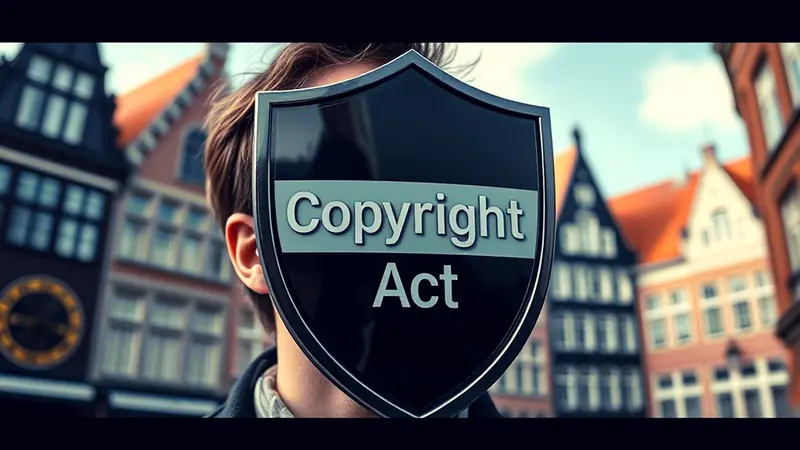
With Copenhagen currently holding the rotating presidency of the EU Council, Denmark's law could become a reference model for a broader EU proposal on digital identity rights.