Key Points
- SpaceX makes history: Market capitalization surpasses $2.2 trillion after a 19% stock surge, Musk becomes the world's first trillionaire.
- SK Hynix on the Nasdaq: $29.4 billion IPO, the second largest stock offering in Wall Street history after SpaceX.
- Oil in freefall: Expectations of geopolitical stabilization in the Middle East crush crude prices, Wall Street surrenders its daily gains.
Wall Street's Feast and Retreat: The Day Gains Vanished
No happy ending last night in New York. Wall Street opened with optimism, built gains throughout the session, and then gave them all back — with the punctuality of someone who already knows how the story ends. The script is a classic one: markets gasping for air, investors glued to tech stocks, a sector that this week has shown volatility to rival a Las Vegas casino. The nervousness is palpable, but it's not just about chips and servers. There's something else at play.
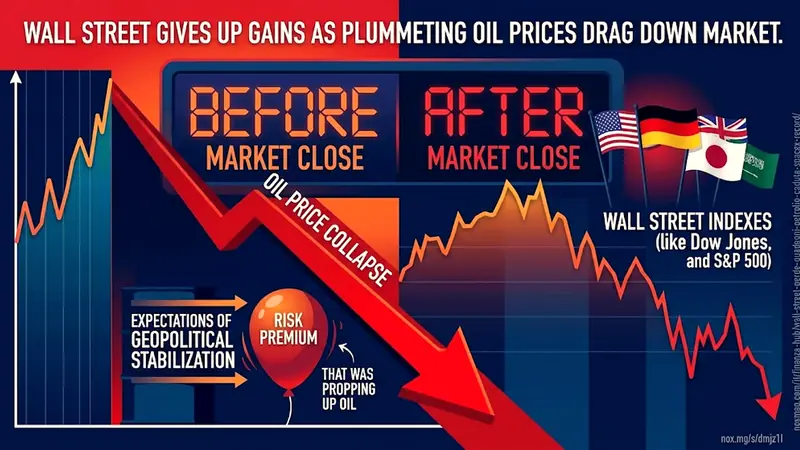
The real culprit behind the decline was oil, which suffered a sharp drop over the course of the day. The reason? Expectations of geopolitical stabilization in the Middle East are deflating the risk premium that had kept crude prices artificially inflated for months. When tensions ease, so does the price per barrel — and with it, a significant slice of the gains made by listed energy majors disappears. A domino effect that dragged the indices lower just as they seemed ready to recover. The market, as always, rewards those who sell before everyone else.
SK Hynix: $29.4 Billion and a Place in History
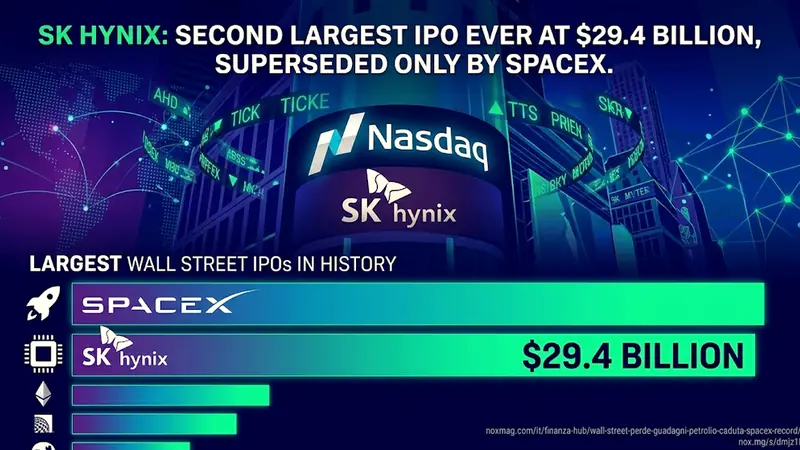
While American traders watched their daily profits evaporate, news arrived from the Asian front that is set to rewrite the textbooks of finance. SK Hynix, the South Korean memory giant, is preparing to list on the Nasdaq in a deal worth $29.4 billion. This is no ordinary listing: we are talking about the second largest IPO in Wall Street history, surpassed only by that of SpaceX. A figure that, on its own, tells you just how much the semiconductor industry has become the true beating heart of the global economy in 2026.
SK Hynix is not an unfamiliar name to anyone following the sector. It is one of the three major global producers of DRAM and NAND flash memory chips, locked in a perpetual battle with Samsung and Micron for dominance of a market that the artificial intelligence boom has turned into a gold mine. Listing on the Nasdaq at this particular moment in history is not merely a financial decision: it is a statement of intent. The company wants fresh capital, wants visibility in the American market, and wants to position itself as a direct counterpart to the US hyperscalers that consume memory at an industrial pace. The deal is being anticipated with an interest that extends well beyond the usual financial circles.
Musk: First Trillionaire — SpaceX Tops $2.2 Trillion and Rewrites History
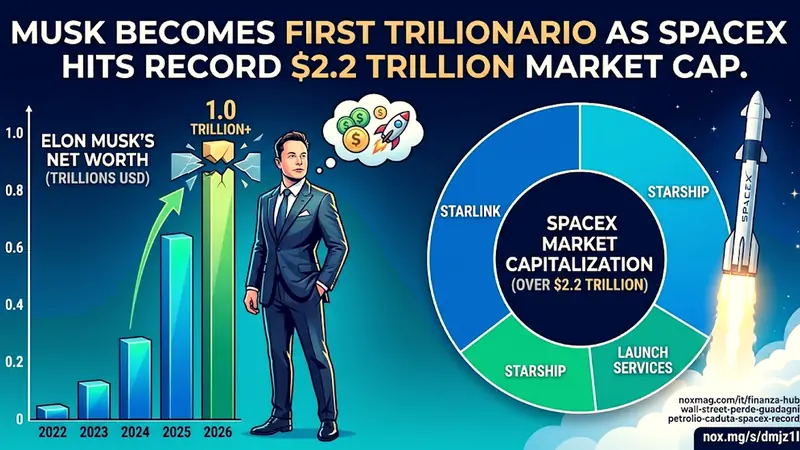
If SK Hynix makes news, SpaceX makes history. Shares in Elon Musk's company surged 19% in a single session, pushing the market capitalization past the symbolic and very real threshold of $2.2 trillion. A figure that takes your breath away. For context: we are talking about a valuation higher than the entire economy of many G20 nations. And the company is not publicly listed, which makes the whole thing even more surreal and, in some respects, unsettling.
The direct consequence of this surge is equally historic: Elon Musk officially becomes the first trillionaire in human history. Not a billionaire. A trillionaire. A word that until a few years ago existed only in dystopian science fiction novels and now appears in the headlines of the world's leading financial media. The concentration of wealth this figure represents is a signal the market registers without much comment, but one that regulators around the world will find increasingly difficult to ignore. SpaceX is no longer just an aerospace company: it has become a systemic financial asset, and Musk its sole reference shareholder, with all the power that entails.
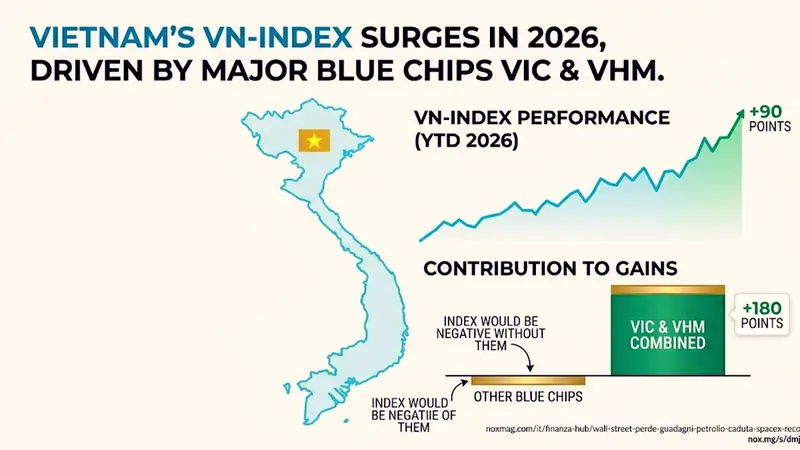
Vietnam's Blue Chips on the Run: VIC and VHM Drive the VN-Index
Far from the Western spotlight, the Vietnamese stock market continues to deliver performances that deserve far more attention. The VN-Index has gained over 90 points since the start of the year, a dynamic that would already be noteworthy in its own right. But the figure that truly stands out is the contribution of the two leading blue chips on the exchange: VIC and VHM, the market's twin locomotives, have alone generated nearly 180 points of index gains. In practice, without these two stocks, the market would be in the red.
It is a concentration of returns that reveals much about the still-maturing structure of the Vietnamese market, but also about the perceived solidity of these two giants in the eyes of institutional investors who are gradually increasing their exposure to Vietnam as an alternative to China. The large-cap segment remains the preferred entry point, and the figures since the start of 2026 confirm that the bet, at least for now, is paying off. Sector analysts estimate that the VN-Index could close the year with an overall gain of between 15 and 20 percent, provided global liquidity holds up.