
Key Takeaways
- Mass Robotics in Japan: 10 million AI-powered robots to be deployed by 2040 as a structural response to the nation's acute demographic crisis.
- Nighttime Solar Energy in Chile: Grenergy signs a 1 TWh annual solar supply contract backed by gigawatt-scale storage (large battery systems storing excess daytime energy), delivering 24/7 renewable output.
- Agentic AI Regulation: The Bank of England launches a regulatory review to contain systemic risks posed by autonomous AI agents (systems that act independently, not just advise) operating across global financial markets.
The World Does Not Wait: Q3 2026, AI Stops Being a Sector and Becomes the Planet's Skeleton
It is July 1st, 2026, and the third quarter opens with rare brutality. We are not talking about announcements, roadmaps, or keynotes packaged for journalists. We are talking about decisions already made, contracts already signed, laws already under revision. Artificial intelligence has stopped being an isolated technology vertical. It has become the infrastructure. The backbone. The nervous system of the global economy. And those who have not grasped this yet are already losing ground.
Anthropic Moves Capitals, Not Just Data
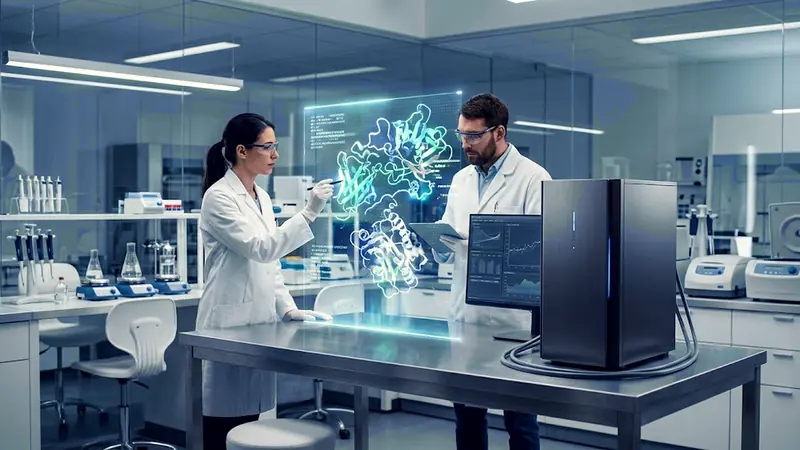
Anthropic launches Claude Science, and this is not yet another large language model (AI system trained on vast text datasets) with a catchy name. It is a vertical analytical tool, surgically built for scientific research, with its sights locked on the pharmaceutical and biotech sectors. The stated objective is to slash the time and costs of research and development phases — those phases that traditionally consume years and billions before producing anything concrete. If it delivers on its promises, the drug development cycle could change shape entirely within a few years.
But the truly explosive news is not the product. It is the geopolitics revolving around it. Austria is leading a European initiative to attract Anthropic to Vienna. Regulatory pressure in the United States is opening a window of opportunity that Europe intends to exploit through targeted strategic incentives. The signal is precise: the center of gravity of innovation is contestable, and someone in Europe has finally decided to play hardball rather than simply regulate what others build.
London Puts a Fence Around Algorithms That Decide Alone
Meanwhile, in London, the Bank of England has launched a deep regulatory review. The subject is agentic AI (systems that execute operations autonomously, not just answer queries) — that category of systems that does not merely respond to questions but executes operations independently: payments, high-frequency trading (automated buying and selling at millisecond speed), cybersecurity protocols. Algorithms that act, not just suggest. The institution wants to build a safety perimeter before these autonomous agents generate systemic risks (cascading failures across interconnected financial systems) that become impossible to contain. This is a preventive move, not a reactive one. And the fact that it comes from a central bank, not a tech authority, says everything about the direction in which the global financial sector is heading.

Japan Counts Robots, Not People
Japan has formalized a national strategy unprecedented in its scope: 10 million AI-powered robots integrated into the country's productive and social fabric by 2040. This is not industrial optimization. It is survival. Japan's demographic crisis is among the most severe in the world, and Tokyo has chosen to respond with advanced robotics as a structural solution, not a stopgap measure. Fourteen years to radically transform the labor market of an entire nation. The plan is in motion.
Vietnam and Thailand: Asia Reorganizes Its Own Foundations
Vietnam is accelerating institutional reforms. The four priorities set by the Secretary General in implementing Resolution 57 (a national directive streamlining governance and foreign investment frameworks) aim to cut bureaucratic friction and attract foreign capital in a systematic way. Hanoi wants to consolidate its position as a global manufacturing and technology hub, and it is doing so through structural work on the country's regulatory foundations — not through hollow announcements.
Thailand's Stock Exchange, the SET, is preparing to implement new listing criteria this quarter dedicated to so-called "New Economy" companies. The objective is to create a dedicated index (a tracked list of stocks in a specific sector) for the high-tech sector, capable of retaining innovation capital within national borders rather than watching it migrate toward more mature financial markets. Also in Thailand, the national postal service has integrated its logistics systems with platforms such as Shopify and WooCommerce, opening local SMEs to direct access to international marketplaces and reducing dependence on the domestic market alone.

The Sun That Works at Night: Chile Rewrites the Rules of Energy
Closing the picture is a development that physically redefines what reliable renewable energy means. In Chile, Spanish firm Grenergy has signed a contract to supply 1 TWh annually of nighttime solar energy. This is not an oxymoron. It is the result of gigawatt-scale storage systems (industrial battery arrays storing surplus solar output) that allow energy produced during the day to be stored and released continuously, guaranteeing a renewable baseload (minimum power level supplied around the clock) active twenty-four hours a day. It is an evolutionary leap that transforms solar energy from an intermittent source into stable industrial infrastructure.
The Picture Is Clear: Those Who Integrate, Survive
Read together, these events trace an unambiguous macro-trend. Technological fragmentation is giving way to highly integrated ecosystems, where computational power, advanced logistics, adaptive markets, and continuous energy supply merge into a single coherent system. The nations and companies capable of building this integration are not simply innovating. They are setting the rules of the game for the next several decades. Q3 2026 has only just begun. The pace will not slow down.