Key Takeaways
- Production capacity: The demonstration plant in Longlaville targets an annual output of 50,000 tonnes of recycled PET (plastic used in bottles).
- Technology: Enzymatic recycling process developed by Carbios, capable of breaking plastic down into its original monomers (basic chemical building blocks) without any loss of quality.
- Partners and backing: Indorama Ventures and Bpifrance's SPI fund (French public investment fund) are involved, alongside French and European public funding.
Plastic That Regenerates Endlessly
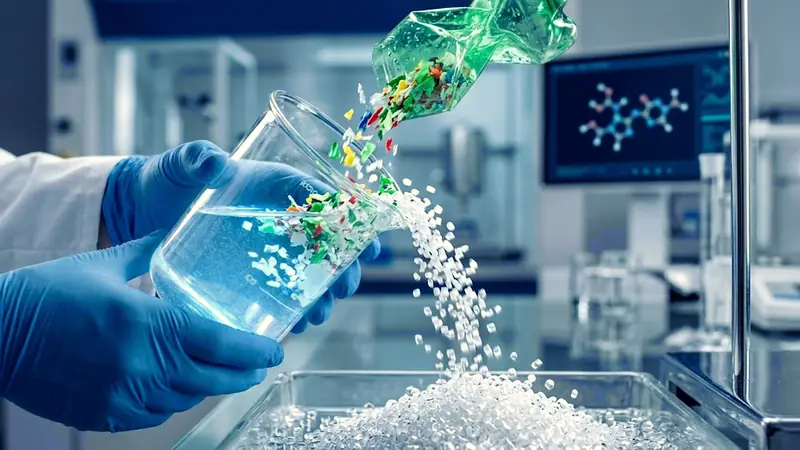
Carbios, a deep tech company (advanced science-based technology firm) headquartered in Clermont-Ferrand, has developed an enzymatic process that breaks PET down to its basic molecular components. The result is a pure, transparent plastic that can be reused without quality degradation, theoretically without limit. The technology specifically targets waste considered unrecoverable by traditional mechanical recycling systems: colored bottles, polyester textiles, and multilayer packaging that currently ends up simply discarded.
The Longlaville Site and Its Industrial Allies
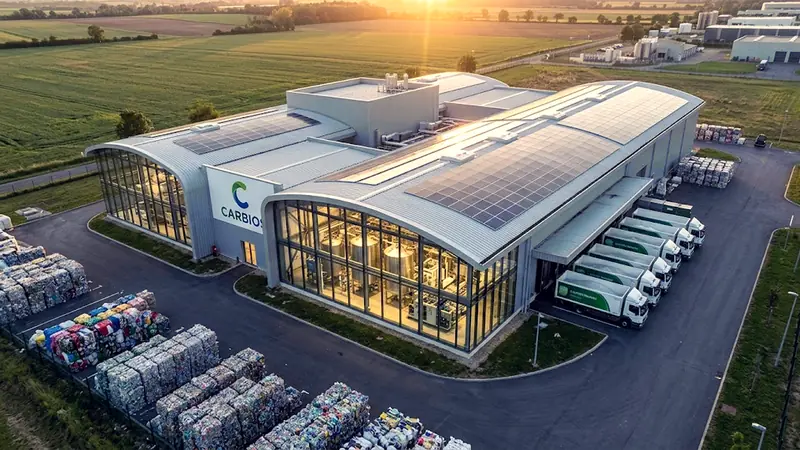
In the Grand Est region, construction has begun in Longlaville on the first industrial-scale demonstration plant, with a planned capacity of 50,000 tonnes per year. The project has attracted industrial giant Indorama Ventures as a partner, while the French State has committed resources through the SPI fund, managed by Bpifrance (French public investment bank), alongside European grants aimed at supporting the shift toward circular materials.
Delays and Technological Competition
The path hasn't been straightforward: the company has fallen behind its original schedule, and the process's economic viability at industrial scale remains to be proven. Thermochemical depolymerization (a competing chemical breakdown method) is also advancing on the market, promising similar results through a different approach. 2026 is shaping up to be the year of reckoning, determining whether France's enzymatic bet can hold up against real-world production demands.