Key Takeaways
- Two continental models: in Kenya merchants hold onto their Bitcoin, while in Nigeria they convert it instantly through stablecoins, with volumes ranging from $500,000 processed by Mular to $435,000 handled by CoinCircuit since December 2025.
- Key technologies: Lightning Network powers Bitcoin-to-M-PESA transfers via the Tando platform, stablecoin-to-local-currency integration drives Mular and CoinCircuit, and Luno Pay processes over 2 million rand a month in South Africa.
- The regulatory bottleneck: merchants still cannot use the crypto they receive to pay suppliers or taxes — a chokepoint that will decide whether this system stays niche or becomes mass-market infrastructure.
A sign in Juja, a restaurant in Lagos
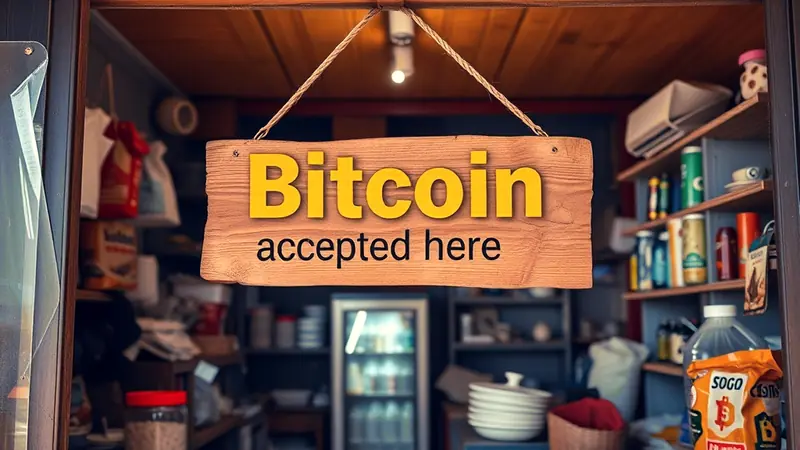
In Juja, Kenya, Faith Mbinya hung an orange-and-white sign at the entrance of her home goods shop: "Bitcoin accepted here." In Lagos, Nigeria, Trib3 Lagos restaurant takes crypto payments too — but on the opposite premise: everything gets converted to local currency instantly, with not a single satoshi held back. These two approaches sit at the poles of the same broader trend: making crypto usable in everyday African commerce, not just for cross-border arbitrage.
The Kenyan model: hold the asset
Mbinya started accepting Bitcoin in November 2025 to cut down on transaction costs tied to local banking channels and M-PESA. Each month, four or five customers — almost all under 35 — pay in Bitcoin; one recently bought home goods worth the equivalent of $46 in crypto. Her case isn't isolated. In Kenya, the Tando platform lets users send Bitcoin to any Kenyan phone number, with the recipient getting shillings straight into their M-PESA account — no wallet or Lightning channel management required. The Lightning Network is what makes the transaction fast and cheap. In South Africa, consumers spend over 2 million rand a month through Luno Pay: they pay in crypto, merchants receive rand.
The Nigerian model: eliminate the risk
In Lagos, the logic flips. Merchants want zero exposure to the volatility of digital assets. Mular, a Nigerian crypto payments startup, identified the real bottleneck not at the merchant's end, but in the last mile between the customer's wallet and the seller's bank account. The founders watched a relative fail to pay for clothes at a shopping mall despite having plenty of crypto funds available. That moment sparked a platform that has already processed roughly $500,000 in payments, with individual merchants handling between $62,000 and $218,000. CoinCircuit has crossed $435,000 in volume since December 2025.

The variable behind the divergence
Volatility is what drives the choice of model. Holding Bitcoin exposes merchants to the asset's price swings; stablecoins, pegged to reference currencies, shift that risk onto whoever held the original asset. Demand comes from consumers who already own crypto — freelancers, remote workers, exporters — looking to spend it without constant conversions. In South Africa, the demographic data confirms the imbalance: only 7% of crypto holders are over 55, while 83% fall between 18 and 44. Merchants, generally older, remain wary of the asset and prefer local currency.
The structural limit
The system runs into a precise operational constraint: merchants can't use the crypto they collect to pay suppliers, wages, or taxes. Esca Finance's CEO puts it plainly: when a merchant collects USDC, they can't turn around and hand it to their supplier to buy new stock. The crypto stays locked at the final end of the chain, unable to flow back upstream.

Scale and outlook
Crypto payments remain marginal next to card networks and mobile money: in Kenya, mobile money transactions hit $63.8 billion in 2025. Still, the infrastructure being built here concerns money that already exists natively on the blockchain, not fresh liquidity waiting to be converted. The decisive test will be regulatory: whether volumes grow large enough to draw the attention of authorities, and whether those authorities let both models expand rather than clamp down on them. Without regulatory opening, crypto will stay a peripheral system for moving and storing value. If regulators do open up, the young user base already active in Bitcoin and stablecoins could become the core of the mass market African merchants will need to capture.